Your system of record.
Parties, stage, money, dates, related objects and risk flags, from the mirror, on one screen. Live in production today.
The most expensive ten minutes in any professional business is the ten minutes before a meeting, spent reconstructing a relationship from four systems. Mayeshal puts the record, the dates, what is outstanding and what changed since you last looked on one screen, and it does it on a schedule so nobody has to remember to ask.
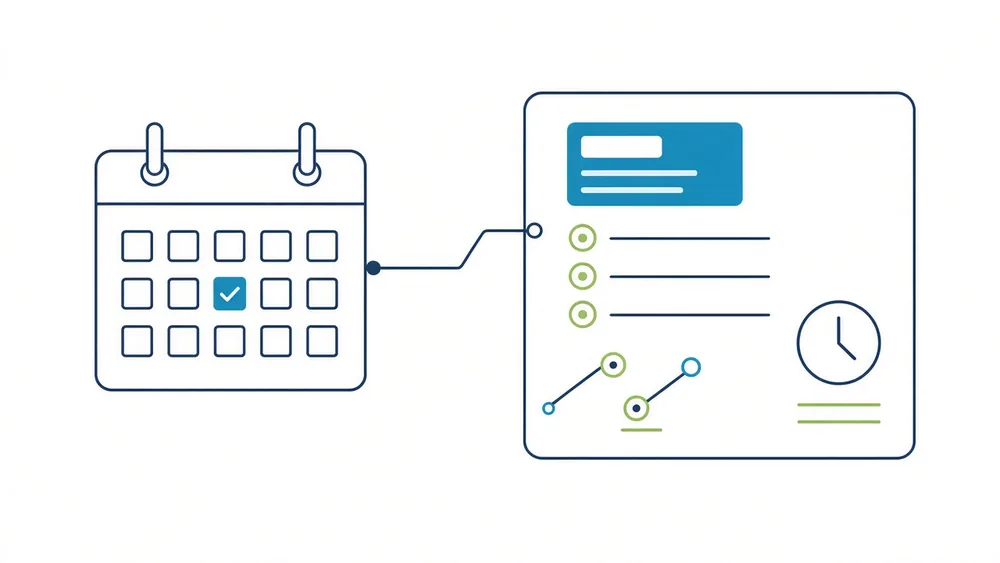
A record tells you what somebody last typed into it. The actual state of a relationship is spread across a mail thread nobody filed, a meeting nobody wrote up, a document that arrived on Tuesday and a date that lives in a calendar event rather than in a field. Preparing properly means visiting all of it, which is why most people do not.
We got this wrong ourselves for a period, and the correction is the reason this page exists. Our assistant answered deadline questions from a date field on the record. A case manager at a client firm watched it miss every real deadline on her active file while 116 calendar events sat visible the whole time. The field was stale. The calendar was right.
The reason it was invisible is worth telling, because it separates an integration from a demo. Calendar events and tasks each carry a lookup back to the record that does not appear in the record's own list of child relationships. Only a reverse sweep of every object in the org finds it. So we stopped hand picking objects, and the brief now reads the real calendar.
Most of the work is deterministic. The model is used at the end, to write the paragraph, and the whole run costs pennies.
The meeting, the call or the deadline is resolved from real calendar events and tasks in the source system rather than from a summary field, and where a field disagrees with the calendar the screen says so instead of quietly picking one.
The record snapshot, the parties, the money, the dates, the risk flags and the outstanding items are all native pulls. None of that costs a token, and none of it can be hallucinated because none of it is generated.
A small number of model calls summarise the new material: what arrived, what was agreed last time, what is still open. It is a digest of what changed rather than a digest of everything, which is the difference between a brief and a wall.
A morning brief per person, or a brief on demand before a specific conversation, with every claim in it opening the document and page behind it.
The record half runs in production today. The correspondence half arrives as each connector is authorised in your tenant.
Parties, stage, money, dates, related objects and risk flags, from the mirror, on one screen. Live in production today.
The real schedule rather than a status field, read through the discovered relationship graph that is rebuilt nightly.
What arrived since you last looked, summarised, with the page behind every line. Live in production today.
The thread and the transcript, so the brief covers what was said as well as what was filed. These connectors are written and are authorised in your own tenant at implementation.
A partner before a client review, an adviser before an annual meeting, a case manager before a call, a quality lead before a supplier audit.
Records, deadlines, negotiations and the document file never sit in one place, and the client is asking one question about all of it.
Legal pack, live in productionClient records, a books and records obligation, and an examiner who wants to see what you knew and when.
Pack built and signedSpecification, supplier and quality data spread across systems that were never introduced to each other.
First customer buildClient documents arriving as PDFs and email, and a person moving them into a spreadsheet by hand.
First customer buildThe record snapshot, the real calendar read, the risk flags, the outstanding items and the morning brief run in production today at a live customer. That is the half built on systems that are connected.
The fuller brief, the one that also reads your mail thread and your meeting transcript before you walk in, depends on those connectors holding credentials in your tenant. They are written and tested, and authorising them is an implementation week task rather than a build, but no customer has that composed brief running today and we will not demonstrate it as though someone does.
It also does not tell you what to say. It tells you what is known, what is outstanding and where each of those came from. The judgement in the room stays yours.
Thirty minutes, on a screen share, on a matter you pick. We connect nothing, install nothing and ask for no credentials to have that conversation. If it is not obviously useful in the first ten minutes, we will tell you so and you get your afternoon back.