Your case management platform.
Parties, dates, the procedural posture, the calendar events that carry the real deadlines and the relationships the platform does not surface on its own.
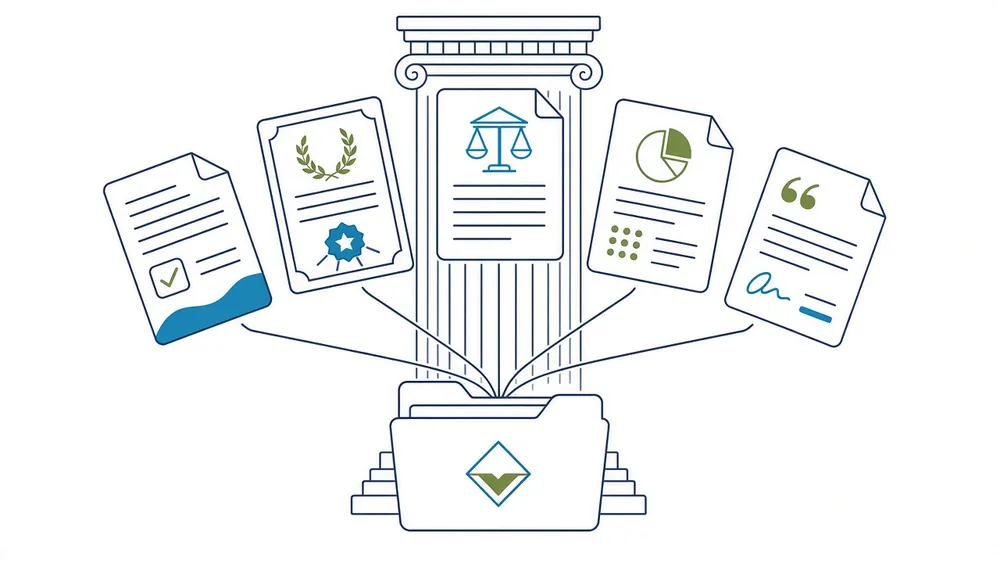
Pre litigation is the part of a plaintiff file that most legal AI covers, and it is the shorter half of the work. The litigation suite drafts discovery requests and responses, complaints, deposition outlines, motions and mediation briefs from the same grounded corpus, so the draft cites the record instead of gesturing at it.
A tool that handles intake, records and a demand letter has covered the phase of the file that is the most repeatable and the least expensive. The moment a case goes into suit, the volume of drafting goes up, the deadlines get hard, and the tooling disappears.
What replaces it is a junior fee earner reading the same medical records for the fourth time in order to write a set of interrogatories, or building a deposition outline by scrolling a chronology somebody already built. The knowledge is in the file. It is just not reachable at the moment the drafting happens.
That is a grounding problem rather than a writing problem, which is why it belongs on top of a corpus that has already read every page rather than in a separate product that has read none of them.
The drafting runs against the same indexed corpus, the same relationship graph and the same approval gate as everything else.
Delivered in your implementation
Every document in the matter has already been opened page by page, indexed and summarised. Drafting starts from that corpus rather than from a prompt somebody types in describing the case from memory.
Discovery requests and responses, complaints, deposition outlines, motions and mediation briefs, built from your firm's own templates and clause library so the output reads like the firm rather than like a model.
Factual assertions carry the document and page behind them. Where the record does not support an assertion, the draft names the gap rather than writing around it, which is the same discipline the rest of the platform runs under.
Nothing moves without a named attorney approving it, behind the contamination check that fails closed. Fact dependent sections that require judgement are marked as such and are left to the person who carries the file.
The suite is the top floor. It is only as good as the corpus and the record graph underneath it.
Parties, dates, the procedural posture, the calendar events that carry the real deadlines and the relationships the platform does not surface on its own.
Records, correspondence, reports and photographs, read page by page and citable to the page, which is what makes a factual assertion in a draft checkable.
The firm's conventions, in the firm's language. We would rather match what you have always sent than introduce a scheme you have never used.
One trail, one gate, and a contamination check that refuses a draft naming another client's identifier.
The suite is part of the legal pack. The floors underneath it are industry neutral and serve every other pack unchanged.
Records, deadlines, negotiations and the document file never sit in one place, and the client is asking one question about all of it.
Legal pack, live in productionClient records, a books and records obligation, and an examiner who wants to see what you knew and when.
Pack built and signedIt drafts. It does not decide and it does not file. Nothing Mayeshal produces goes to a court without an attorney reading it, approving it and filing it, and the sections that turn on judgement are marked for the person who has to exercise it.
It is grounded in your record rather than in published authority. Case law search with citation verification is a separate capability with its own page, and a draft that needs authority behind it gets it from there or from a person.
It arrives inside your implementation rather than on the day you sign, and it lands within the ninety day window. If litigation coverage is the reason you are evaluating, say so on the call and you will get the real date and the real scope rather than a nod.
Thirty minutes, on a screen share, on a matter you pick. We connect nothing, install nothing and ask for no credentials to have that conversation. If it is not obviously useful in the first ten minutes, we will tell you so and you get your afternoon back.