Your records.
Figures, parties, dates and related objects come out of the mirror rather than out of somebody remembering to update a field.
Somebody in your business is retyping numbers out of one system into a template in another, and then checking them twice because they know what happens if a figure is wrong. Mayeshal reads the sources, does the arithmetic as arithmetic, and builds the finished document from your own template and your own language.
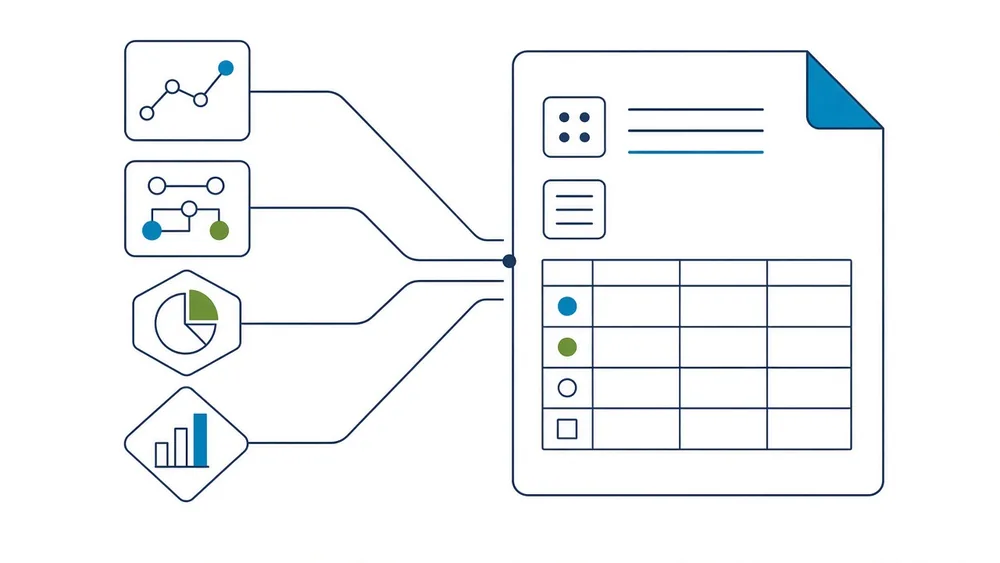
The recurring document is the same shape every time and it is assembled by hand every time. The figures come out of the record system, the supporting material comes out of the document store, the language comes out of whatever the last good example was, and the person doing it is the only one who knows the order.
A generative tool that writes the whole document from a prompt solves the wrong half. The words were never the hard part. The hard part is that the numbers have to be right, they have to match the records they came from, and the output has to look like everything else your organisation has ever sent.
So the split here is deliberate. Almost all of the document is deterministic, and the model is used for the one part that genuinely needs writing.
One demand package at a live firm runs this path end to end, and the largest one assembled so far came out at 1,508 pages across 23 contiguous page ranges.
Records out of the mirror, supporting documents out of the corpus, approved language out of your own clause library. Nothing is retyped and nothing is pasted, so nothing drifts.
Tables, totals, offsets and date arithmetic are calculated from the underlying records. A model is never asked to add up a column, because a model that is right ninety nine times out of a hundred is the wrong tool for arithmetic.
Where a narrative genuinely has to be written, exactly that part is written by a model, at temperature zero, so the same facts produce the same words. If the facts are not there it writes a placeholder and tells you rather than inventing a paragraph.
The letter, a table of contents mapping each source to an exact page range, divider pages, and the real supporting PDFs from your own storage. The page ranges are computed during assembly, so they are always right.
Sources on one side, output formats on the other, with an approval between them and the finished file.
Figures, parties, dates and related objects come out of the mirror rather than out of somebody remembering to update a field.
Supporting material is pulled from the indexed documents themselves, so what goes in the packet is the real file rather than a re-rendered approximation of it.
The output looks like your organisation because it is built from your organisation's own conventions and approved language, not from a generic house style.
Word from markdown, template fill, in place editing that preserves formatting, spreadsheets, PDFs, structured exports and full multi hundred page packets.
Different name, same job: a recurring artefact assembled by hand from systems that do not talk to each other.
Records, deadlines, negotiations and the document file never sit in one place, and the client is asking one question about all of it.
Legal pack, live in productionClient records, a books and records obligation, and an examiner who wants to see what you knew and when.
Pack built and signedSpecification, supplier and quality data spread across systems that were never introduced to each other.
First customer buildClient documents arriving as PDFs and email, and a person moving them into a spreadsheet by hand.
First customer buildPowerPoint is not an output format today. Word, Excel, PDF and assembled packets are. If a presentation is the artefact that matters to you, say so on the call and we will tell you where that sits rather than nodding.
It does not create or transmit an electronic signature envelope. Mayeshal reads the signature records already sitting in your system. Standing up signing on a document execution platform is implementation work our team quotes separately, and we keep those two things apart on purpose.
And it will not produce a document it cannot support. Every draft runs a contamination check on approval, on packet generation and again on hand over, and it fails closed. A draft carrying an identifier from another client's file cannot be approved, cannot be packaged and cannot go anywhere. If the checker itself is unavailable the answer is no rather than yes.
Thirty minutes, on a screen share, on a matter you pick. We connect nothing, install nothing and ask for no credentials to have that conversation. If it is not obviously useful in the first ten minutes, we will tell you so and you get your afternoon back.